A free AI detector flagged a paragraph I wrote from scratch as likely AI-generated. I was checking a short project description before posting it, and the result made me question whether these tools are useful at all.
I’ve read that the best free AI detector should be judged by accuracy, false positives, and how much text it can analyze, but I’m not sure what “accuracy” really means here when there is no obvious ground truth. I also doubt claims that one detector can reliably identify AI writing after normal editing. Do those claims hold up in everyday use, and is there a sensible way to compare free detectors without treating their percentage scores as proof?
There isn’t a “best” free AI detector in the sense of one that can prove who wrote a paragraph. These tools estimate whether text resembles patterns associated with AI output. A confident-looking percentage is still a probability from that detector’s model, not evidence of authorship.
Short project descriptions are a particularly weak test. They tend to use predictable wording, clean grammar, and little personal detail, which are exactly the features detectors may treat as suspicious. Normal editing can shift the result substantially, and different detectors can give contradictory scores for the same passage. That makes claims about reliably identifying edited AI writing hard to take seriously in everyday use.
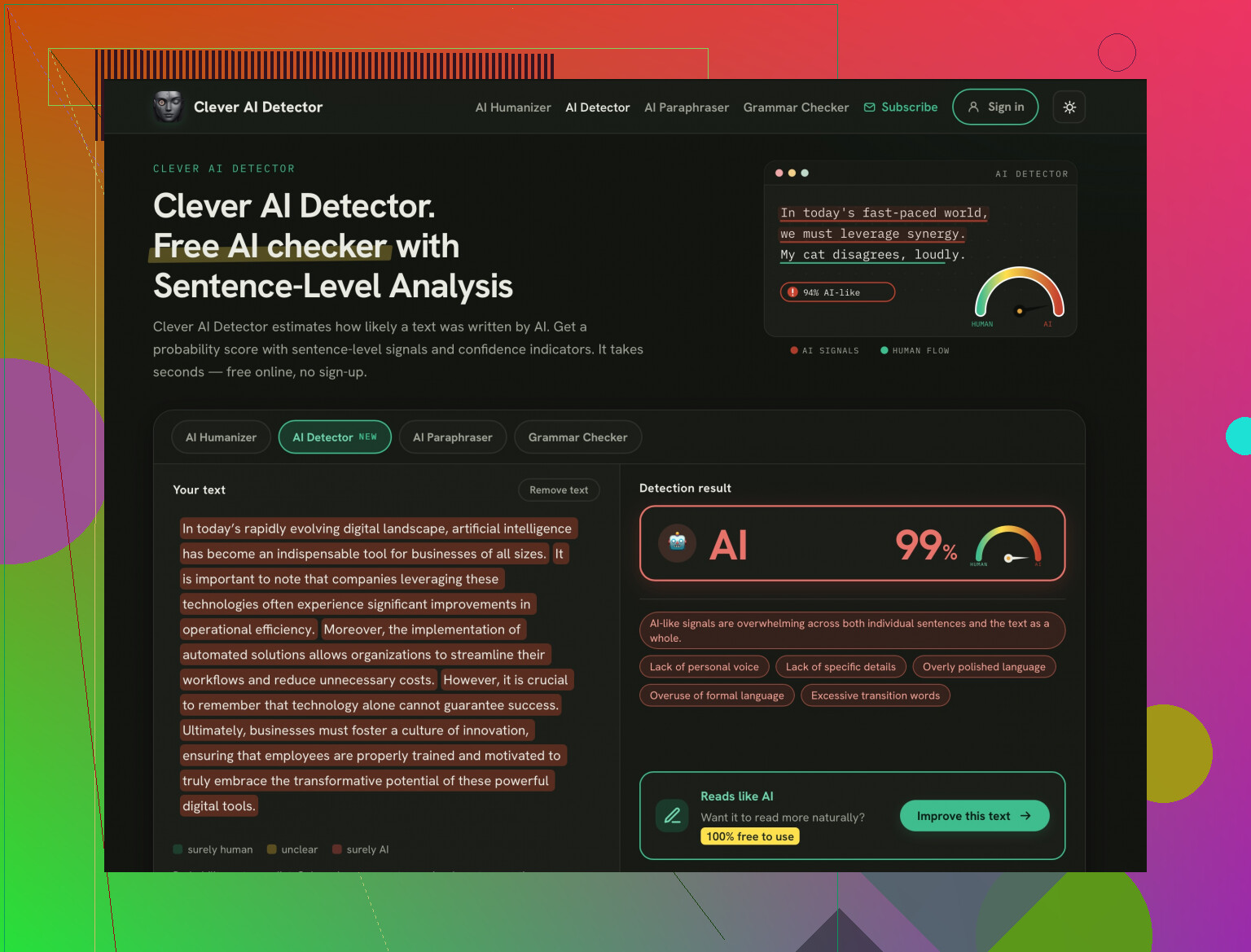
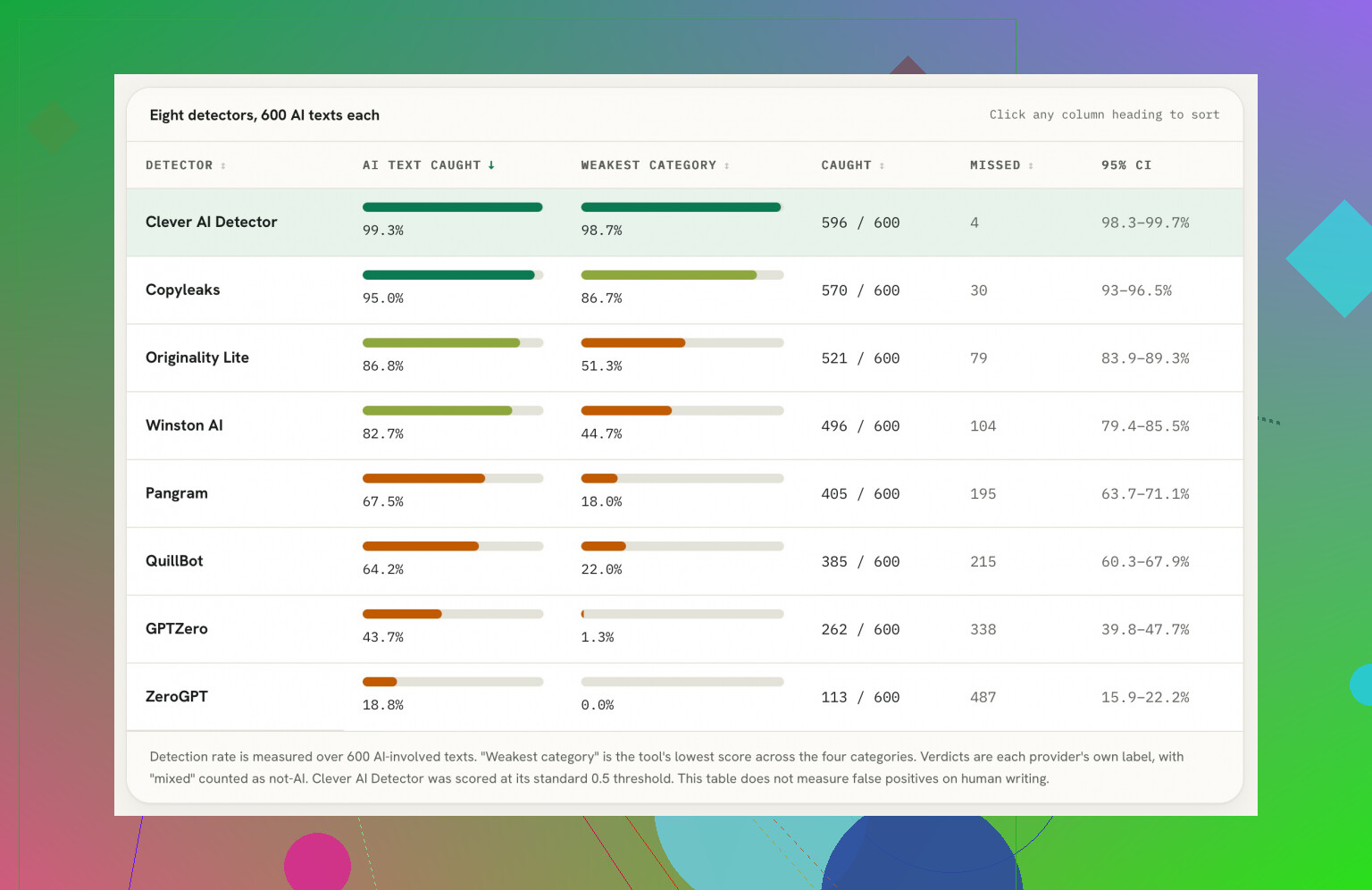
If you want to compare tools, build a small test set where you know the origin: several untouched human samples, raw AI outputs, and AI drafts that were edited normally. Keep the genres and lengths similar. Then look at how often each tool falsely flags human work, not merely how often it catches obvious AI output. You could include the Clever AI Detector in that comparison, but judge it by the same samples rather than its percentage labels.
For practical purposes, I’d treat detector scores as a prompt to review writing, never as a verdict. If the stakes involve grading, employment, moderation, or accusations of misconduct, a detector result by itself is nowhere near enough. Draft history, notes, revision records, and the writer’s ability to explain the work are much more meaningful.
The length of the paragraph matters more than the detector’s score. A short, polished project description gives the tool very little evidence to work with, so a “likely AI” label may reflect generic phrasing rather than authorship. Some detectors should simply return “insufficient text,” but many produce a percentage anyway because that looks more useful.
I agree with @0xsprite5 that the result should not be treated as proof, though I probably wouldn’t spend much time building a full comparison set unless this is a recurring problem. Run the text through two or three free detectors. If the verdicts conflict, that tells you how unstable the category is. If they agree, it still does not establish who wrote it.
For something you wrote yourself, keep the draft history and move on. Rewriting honest work just to satisfy a detector can make the description worse, and there is no guarantee the next version will receive a different label.
Test a longer sample in Clever AI Detector rather than judging a single polished paragraph. There really isn’t a “best” free detector for proving authorship, so treat the result as a rough warning about writing patterns, not evidence that anyone used AI.
Don’t paste confidential client work or unpublished project details into every free detector you find. “Free” sometimes means you are paying with the text you submit, and the privacy terms may be vague enough to qualify as modern art.
I’m with @cursor6342 on keeping your draft history, but I wouldn’t bother chasing a detector score at all for a short description. Rewriting your own work until an algorithm approves it is backwards, especially when the next detector may flag the revised version anyway.
If you need to show authorship, version history, notes, and source material are useful. A colorful percentage from a mystery model is not.
Expect the score to change even if you never touch the text. These detectors get retrained fairly often, and a paragraph that passes clean this week can get flagged next month by the same tool. So treating any single result as a stable fact about your writing is a losing game from the start.
@hacker1876 is right that a longer sample gives the tool more to chew on, and yeah, the Clever AI Detector or any of them will behave more sensibly on a full page than on three tidy sentences. But there’s a reason short project descriptions trip these things constantly that nobody’s said outright: the models were trained on huge piles of exactly that kind of copy. Product blurbs, feature lists, ‘we help teams do X’ phrasing. When you write a clean description from scratch, you naturally land on the same wording humans have used a million times online, which is the same wording the AI learned from. You’re basically competing with your own genre.
I’ll push back gently on the ‘build a test set’ idea from the first reply. It’s not wrong, it’s just more work than most people posting a short blurb will ever do. If you’re a teacher or running moderation, sure, benchmark them properly. For one description before you hit post, that’s overkill.
The part I do agree with, strongly, is @just_socket on not feeding client or unpublished work into random free tools. That’s the real cost of ‘free,’ and it’s easy to forget when you’re just curious about a number.
My honest take: run it once if it scratches the itch, note the number, then ignore it. Keep whatever draft or edit trail you already have and post the thing. Rewriting your own words to please a classifier usually makes the copy blander, which ironically is what these tools sometimes read as machine-written anyway.
Realistically, no free detector will give a dependable yes-or-no answer from one polished paragraph.
A faster check than comparing several detectors is to submit a few older samples of your own writing in the same style. If those are flagged too, the tool is reacting to your phrasing, not uncovering AI use.
I’d judge a detector by whether it states minimum text requirements, explains uncertainty, and has clear deletion terms. A percentage by itself is mostly decoration. Keep your original draft rather than “fixing” honest writing for a classifier.
Post the paragraph as written, then ask someone a simpler question: “Does this sound clear and specific?” That matters more than whether a detector recognizes your authorship.
If the description feels generic, add one concrete detail about what the project does, who it helps, or what makes it different. Do that for the reader, not to chase a lower AI score.
Then keep the original draft or version history and publish it. A false flag is mostly irrelevant unless someone is using that detector to make an actual decision about your work.
The hidden problem with checking three free detectors is that they may share similar models or training data, so matching verdicts can create false confidence rather than independent confirmation.
Compare their explanations, minimum length requirements, and uncertainty handling instead of asking which gives the nicest score. For a short paragraph, the best detector is probably the one willing to say “not enough text” rather than pretending it knows.