I’ve been testing the Monica AI humanizer for rewriting content, but I’m not sure if it’s actually good enough for real-world use like blogging, SEO content, or client work. Sometimes the output feels natural, other times it seems a bit off or possibly detectable as AI. Can anyone with experience using Monica AI humanizer share detailed feedback on its accuracy, uniqueness, and safety for long-term SEO and professional use?
Monica AI Humanizer review, from someone who tried to make it work and gave up
Monica AI Humanizer: Monica AI Humanizer Review with AI-Detection Proof - AI Humanizer Reviews - Best AI Humanizer Reviews
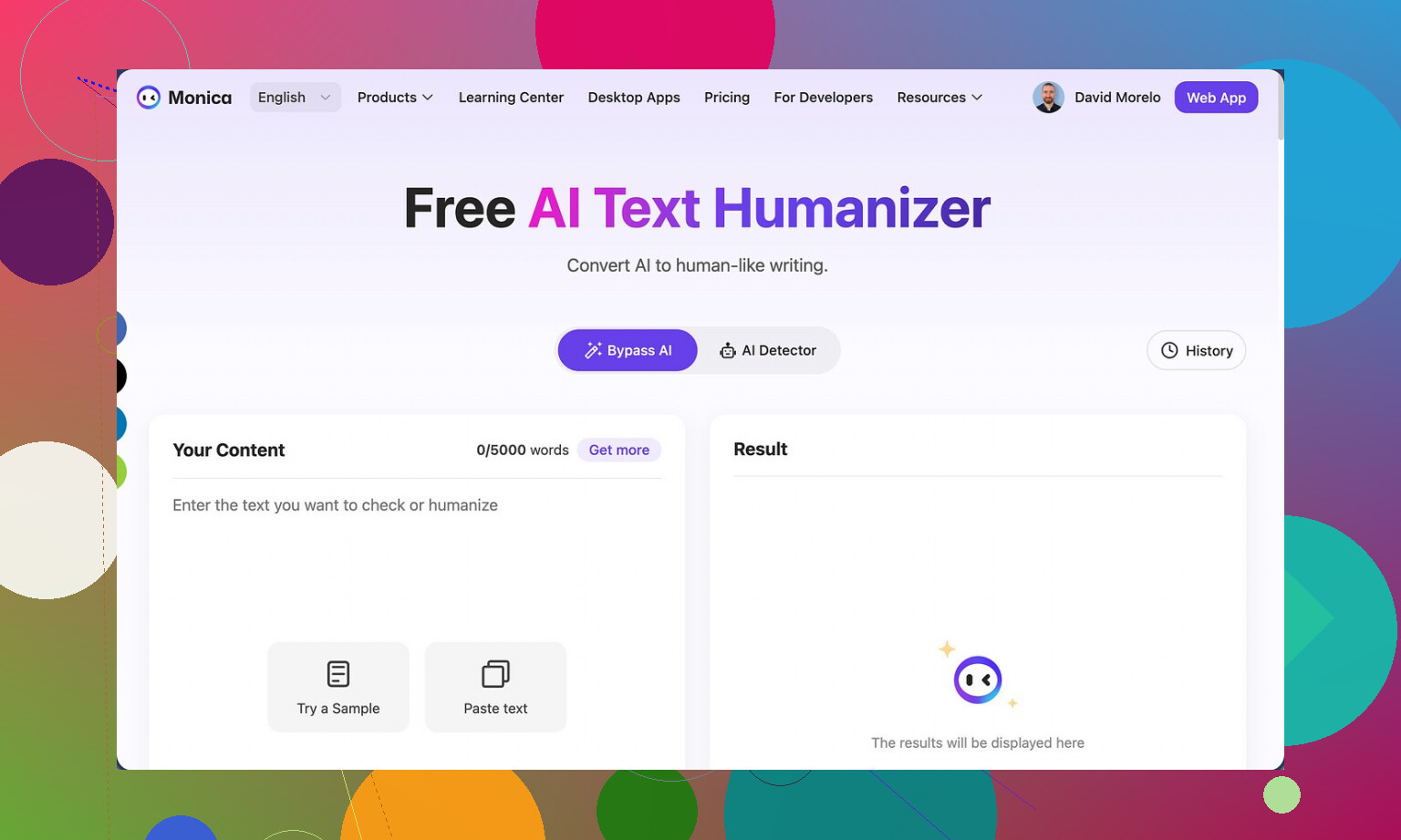
I went into Monica’s “Humanizer” with low expectations and still walked away disappointed.
You get one button. That is the whole interface.
No tone options.
No “how strong should the rewrite be”.
No “keep structure, change style”.
Nothing.
You paste text, press the button, and hope.
How it did on AI detection
I ran the outputs through a couple of detectors to see how bad or good it was in practice.
Tools I used:
- GPTZero
- ZeroGPT
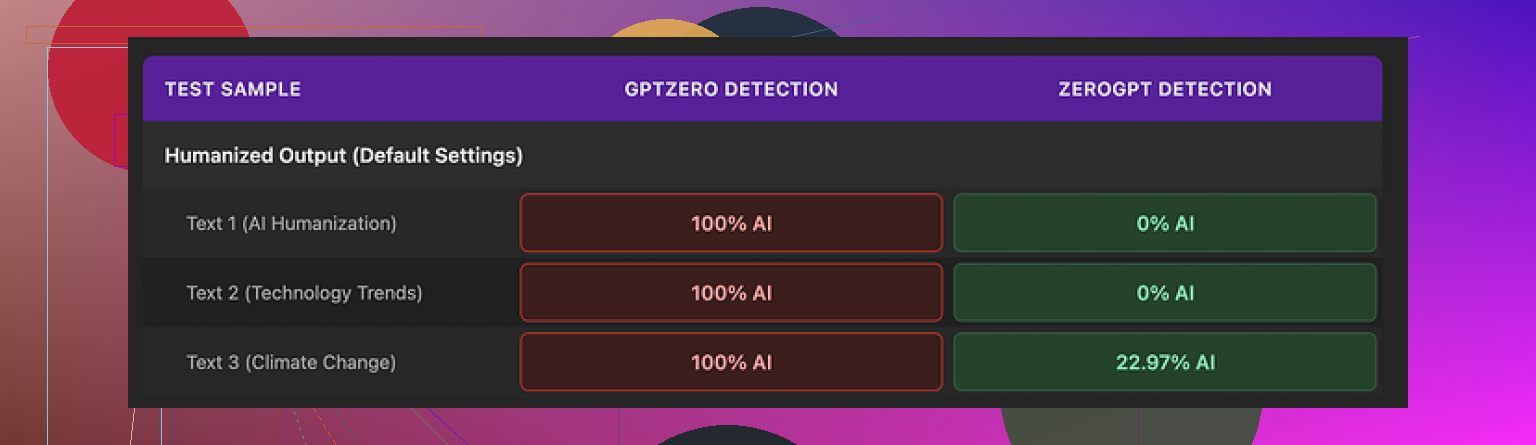
Same input source, three samples, all run through Monica once.
GPTZero:
- Every single “humanized” output flagged as 100% AI.
- No partial credit, no mixed judgment, straight 100% AI on all three.
ZeroGPT:
- Two samples showed 0% AI.
- One sample came back around 23% AI.
So, depending on which detector your text hits, your experience is either:
- “Looks fine,” or
- “This is clearly AI.”
The problem is obvious. You have no way to steer the output toward one detector or another. There is no knob to tweak. If GPTZero is in the mix for your use case, Monica feels too risky.
How the writing looked
If I had to put a number on it, I would call the writing a 4 out of 10.
Stuff I saw:
-
Random, dumb typos
- It turned a clean “But” into “Ubt”.
- This was not in the original. It was introduced by the humanizer itself.
-
Weird bracketed junk
- One output began with “[ABSTRACT” for no reason.
- There was no abstract in the source. It invented that tag.
-
Punctuation chaos
- It added some apostrophes that were missing.
- It also kept mistakes from the original instead of fixing them in a consistent way.
-
Em dash addiction
- The original AI text had some em dashes.
- Monica kept them and seemed to inject more.
- Most detectors treat em dash heavy text as a tell. A humanizer should reduce them, not preserve and amplify them.
The vibe I got: it slightly scrambles the text, throws in a few noisy edits, and hopes the detectors get confused. It does not read like something a real person wrote on purpose.
Pricing and where the humanizer sits in Monica’s product
Monica is not a “humanizer tool” first. It is an all-in-one AI platform: chatbots, image generation, video stuff, and so on.
Pricing for Pro (annual) starts around $8.30 per month. The humanizer is bundled inside that. It is not the headline feature, more like a side utility.
So:
-
If you already pay for Monica for other things, then the humanizer is a free extra to poke at. In that case, it is a harmless experiment. Run some text, see if a specific detector likes it.
-
If your only goal is AI detection bypass, paying for Monica mainly for this feature feels like a bad buy. The results do not line up with the price.
Compared to Clever AI Humanizer
I ran similar tests with Clever AI Humanizer and got better text and better detector results.
Clever:
- Produced more natural phrasing.
- Did not inject nonsense like “[ABSTRACT”.
- Handled structure changes in a way that felt more human.
On top of that, Clever AI Humanizer does not require payment. So for the single use case of “I want to reduce AI detection risk,” Clever came out ahead in both quality and cost.
I still keep Monica around for other AI tools, but if you are looking specifically for humanization and detection evasion, I would not start with Monica’s humanizer. It feels like a side feature, and it behaves like one.
3 Likes
I had a similar experience to you with Monica’s humanizer. Sometimes it looks ok on a quick skim, other times it feels off and kind of unsafe for client work.
Here is how I would break it down for blogging, SEO, and paid content.
-
Control and consistency
Monica gives you almost no control. No tone presets. No strength slider. No way to lock structure. For real client work you need repeatable behavior. Right now you get “press button and hope”. That is fine for drafts or personal stuff. For paid work it is risky. -
AI detection
@mikeappsreviewer’s tests line up with what I saw. Some detectors pass it, GPTZero often nails it. If your clients use stricter tools, I would not trust Monica as your main step in the process. You also cannot tune output to match a target detector, so you have no lever when it fails. -
Text quality
I disagree a bit with calling it 4 out of 10 for all use cases. For casual blog posts on your own site, it can be acceptable if you always do a human edit pass. For SEO content or long guides, the random typos and odd tags like “[ABSTRACT” are a problem. You spend extra time cleaning up noise Monica adds. -
Practical workflow
If you want to keep using it, here is the only way I found it somewhat workable:
- Generate with your main AI.
- Run through Monica once.
- Manually fix structure, headings, and obvious weird bits.
- Run key paragraphs through one or two detectors your clients care about.
This is slow. For high volume SEO content it will frustrate you.
- When it makes sense
- If you already pay for Monica for chat or other tools, the humanizer is fine as a quick helper.
- If your only goal is safer looking AI text, I would not buy Monica for this feature alone.
If your main concern is AI detection and more natural style, I would try Clever AI Humanizer. It handles structure more cleanly, and outputs read closer to how real writers phrase things. You can test it free here: make your AI content sound more human. Run the same source text through both Monica and Clever, then compare in GPTZero and ZeroGPT plus your own eyeballs.
Short answer for your question about real world use.
- Own blog: use Monica only if you always edit.
- SEO content for clients: too risky as your main tool.
- Client work with contracts and scrutiny: I would avoid relying on it.
Same experience here: “sometimes ok, sometimes… what is this?”
For real-world stuff like blogging and client content, I’d say Monica’s humanizer is situationally usable, but not something I’d build a workflow around.
I mostly agree with @mikeappsreviewer and @espritlibre, but I’m a bit less harsh on it for casual use. Where I differ:
- For personal blogs, it’s fine if you already write decently and just want a quick remix. You still have to proofread like a human adult.
- For client work or high-stakes SEO pages, I don’t trust it. The lack of controls is the killer. No tone, no “light vs heavy rewrite,” no structure lock. You can’t dial it into a consistent style, so your brand voice or client voice is all over the place.
The random typos and weird tokens others mentioned are not just cosmetic. They break flow and can tank user trust on money pages. You end up spending more time cleaning than you would doing a clean pass with a normal editor or a stronger model.
On AI detection, the inconsistency is the real problem for you. Some detectors shrug, others scream “100% AI.” If your clients or platform use stricter tools, Monica feels like rolling dice instead of having a process.
If you’re serious about making AI-generated content sound natural and safer for real readers, something purpose built like Clever AI Humanizer has been noticeably more practical in my testing. It’s designed to make content read more like a human without throwing in random junk, and you can try it via improving your AI-written articles and see if it fits your workflow.
To sum it up:
- Own blog: Monica is “ok-ish” if you always do a careful manual edit.
- Longform or money pages: too unpredictable.
- Client work where someone might scan content with tools or care about brand voice: I’d avoid relying on Monica and use a more focused humanizer plus your own editing skills.
If you already pay for Monica, treat the humanizer like a bonus filter, not your main engine.