I’ve been testing Walter Writes AI and it feels a lot like ChatGPT with a different interface. Before I commit to a paid plan, I’d like to know if it’s actually offering anything unique under the hood or if it’s mostly reselling OpenAI with some light tweaks. Has anyone here dug into its features, output quality, or tech stack and can confirm whether it’s just a wrapper or a genuinely different AI writing tool?
Walter Writes AI Review: Rough Experience With An “AI Humanizer”
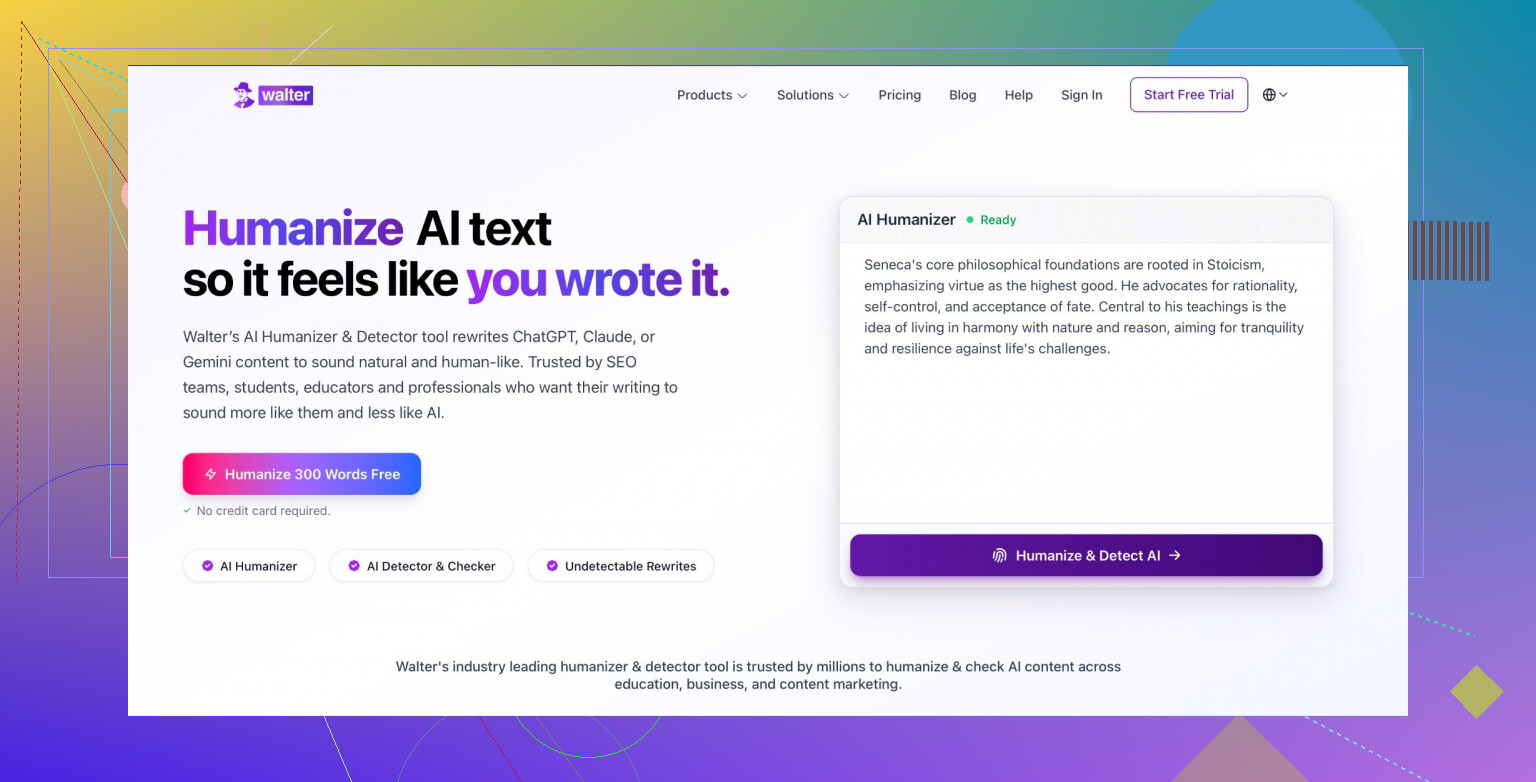
What Walter Writes AI Claims To Be
So I ended up trying Walter Writes AI after seeing it everywhere in search results and random social feeds. It sells itself as this high‑end “AI humanizer” and essay writer that can apparently slip past all the major AI detectors like it is nothing.
The pitch is very student‑focused:
“Paste your AI text here, click a button, and boom, no teacher or detector will ever know.”
In reality, that is not what happened at all when I used it.
The tool says it can turn obvious AI content into something that looks human written. But in practice, it underperformed compared to tools that cost exactly zero. I kept running into word limits, and every useful-looking feature seemed to be locked behind a subscription paywall.
Meanwhile, something like Clever AI Humanizer did a better job for free, which made the whole thing feel pretty pointless on Walter’s side.
Pricing, Limits, And Overall Value
Let me put it this way: Walter Writes AI wants money fast.
The flow is basically:
- Try a tiny sample
- Hit a wall
- Get shoved toward a paid subscription
There are a few big issues:
-
Walter Writes AI
- Monthly plans that are not cheap
- Strict word caps that you hit very quickly
- The cancellation process and fees are not super transparent
-
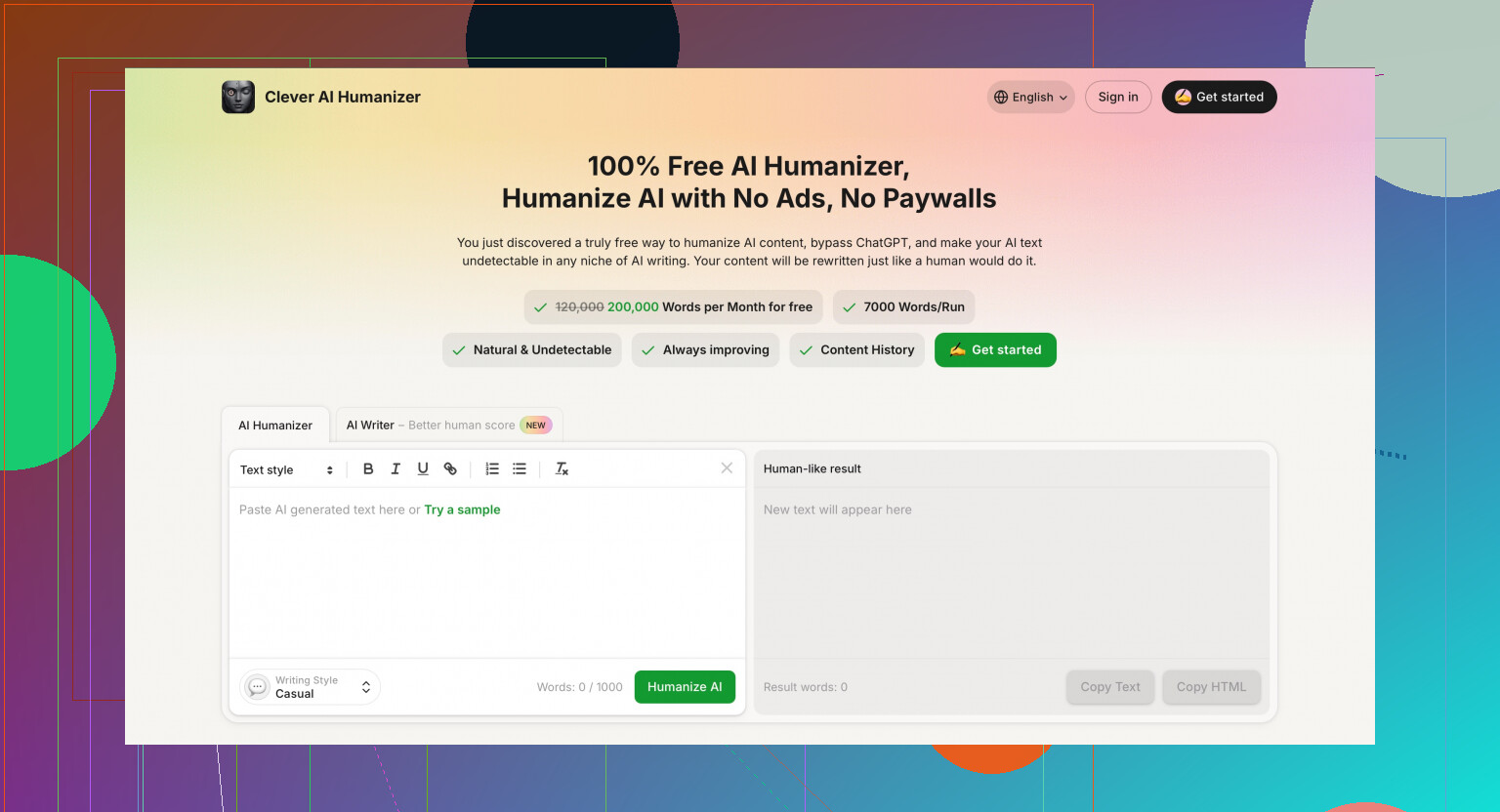
Clever AI Humanizer
- Free to use
- Up to 200,000 words per month
- Up to 7,000 words per run without you having to dig out a credit card
So from a value standpoint, it makes no sense to pay for something that gives you less, works worse, and constantly reminds you that you are on a leash.
If one tool lets you process massive chunks of text for free and another wants you to pay just to get past a short paragraph, the choice is not hard.
How It Performed In Actual Tests
I did not just eyeball it. I ran a simple test that anyone here could recreate.
- I generated a normal essay using ChatGPT
- That original essay showed as 100% AI on the detectors
- I then ran the essay through Walter Writes AI and also through Clever AI Humanizer
- After that, I checked both outputs on multiple AI detectors
Here is what came back:
| Detector | Walter Writes AI Output | Clever AI Humanizer Output |
|---|---|---|
| GPTZero |  100% AI detected 100% AI detected |
 Marked as human Marked as human |
| ZeroGPT | 100% AI detected |
Marked as human |
| Copyleaks | Still flagged as AI / failed |
Marked as human |
| Overall | DETECTED AS AI | NOT DETECTED AS AI |
So the whole “bypasses advanced detectors” thing did not hold up at all for me. The output from Walter still looked and behaved like AI text according to multiple tools.
Clever AI Humanizer, on the other hand, actually passed across those same detectors in this test scenario.
If You Actually Want An AI Humanizer
If you are just starting out with this stuff and do not want to waste time or money, I would jump straight to this:
- Clever AI Humanizer:
https://aihumanizer.net/
Also, there is a running list of other “AI humanizer” tools being discussed here:
My takeaway after testing: Walter Writes AI feels like a paid version of what other tools are doing better for free, with worse results and more friction at every step.
6 Likes
Short version: it does feel like a cheap wrapper, and in your shoes I would not lock into a paid plan.
Here’s the slightly longer take.
From what I’ve seen and what @mikeappsreviewer described, Walter Writes AI is basically:
- A front‑end UI on top of a mainstream LLM (very likely OpenAI or similar)
- Marketed hard as a “humanizer” that “bypasses AI detectors”
- Packed with limits that push you to pay quickly
The red flags for me:
-
Same “voice” as ChatGPT
You already noticed it feels like ChatGPT. That’s usually what happens when a tool is just passing your prompt to an API, slapping on some pre‑prompting like “sound more human, vary sentence length, etc.” and then reselling it. -
Detector bypass claims
Their core value prop is “passes AI detectors.” In testing, as @mikeappsreviewer showed, the Walter output still rang as 100% AI on GPTZero, ZeroGPT, and Copyleaks. I’ve seen similar results posted elsewhere: minor stylistic tweaks, but the statistical fingerprint is still very LLM‑ish.To be fair, no tool can guarantee long‑term detector invisibility. Detectors change, models change. Any site claiming “undetectable forever” is overselling. I slightly disagree with using detector results as the only metric, but if their entire brand is about detection bypass and they miss that mark on multiple tools, that is a huge problem.
-
Paywall pattern
Low free limit, quick wall, vague cancellation. That isn’t automatically a scam, but it screams “SaaS wrapper monetization” more than “serious R&D product.” If they were doing heavy lifting under the hood (custom models, novel algorithms, etc.), you’d usually see more technical transparency and less “just upgrade to Pro.” -
Under the hood reality
You can usually tell a real custom system because it:- Explains what model or stack it uses, at least generally
- Has clearly differentiated features beyond “rewrite / humanize / improve”
- Shows examples where output style is meaningfully different from stock ChatGPT
Walter’s pitch looks mostly marketing + UI, not deep tech. Could there be some custom tuning? Sure. But if you can’t easily tell from usage, that’s kind of the point: practically, to you, it behaves like a wrapper.
-
Risk profile for students
If you’re thinking of paying to “beat” detectors for school:- The tool doesn’t reliably do that (per tests already shared).
- Even if it did, policies are catching up. You’re still on the hook if something gets flagged.
- Low‑quality “humanized” text can actually look more suspicious to a human grader: weird phrasing, fake citations, inconsistent tone.
If what you want is a stylistic humanizer (more varied syntax, less robotic repetition) and maybe some detector dodging, something like Clever Ai Humanizer is honestly more aligned with that use case. Not saying it’s magic or risk‑free, but for actually transforming AI text in a noticeable way, it’s closer to what people think Walter is offering, and it doesn’t immediately shake you down for money.
My rule of thumb:
-
If a tool:
- Feels like ChatGPT,
- Won’t tell you clearly what models it uses,
- Charges aggressively for basic features,
- And can’t pass its own main selling point in simple tests,
then yeah, functionally, it’s just a repackaged ChatGPT experience with marketing copy on top.
If you’re already comfortable with ChatGPT, I’d stick with that for writing and editing, and only bolt on a separate tool like Clever Ai Humanizer if you specifically need that “rewrite to look less AI-ish” behavior. Walter doesn’t really justify its own recurring bill in that ecosystem.
You’re not imagining it. It does feel like a wrapper, and most signs point that way.
I’ll disagree slightly with @mikeappsreviewer and @nachtschatten on one thing: I don’t think being a wrapper is automatically bad. Tons of tools are basically “LLM + UX + a specific workflow” and that can still be worth paying for if:
- The UX actually saves you time
- There’s some smart automation or templates you can’t easily recreate yourself
- Pricing and limits feel fair for what you get
Walter Writes AI, from what you and others described, kinda whiffs on all three.
A few angles that haven’t really been hit yet:
-
Behavioral fingerprint
If you use a bunch of tools side by side (ChatGPT, Claude, Gemini, etc.), you start to notice distinct quirks: phrasing tics, how they hedge, how they structure lists. Walter’s output matching “ChatGPT brain” that closely is a huge tell. Even if they’re using some custom pre‑prompting, it’s still just “ChatGPT + instructions” on the backend. -
Feature surface vs marketing
Ignoring the “undetectable” hype for a second, what are you actually paying for?- Basic rewrite / paraphrase
- “Humanize” button
- Tight word caps
None of that is technically special. You can mimic 90% of it in ChatGPT with a decent system prompt like:
Rewrite this to feel more like a naturally written student essay, vary sentence length, reduce repetition, maintain meaning, avoid sounding formal or corporate.
Save that as a custom instruction and boom, you basically have “Walter,” minus the naggy paywall. -
No obvious model diversity
A genuinely interesting tool would mix multiple models or approaches:- One pass to restructure
- One pass to inject errors / imperfections
- One pass to change vocabulary to a specific grade level
Walter doesn’t appear to do that in any visible way. Output looks like single‑pass LLM text with minor tweaks, which is exactly what a straightforward API call would produce.
-
The “AI detector bypass” reality check
Even if Walter did occasionally slip past some detectors, you’d still be dealing with:- Detectors that update constantly
- Different institutions using different tools
- Human reviewers who can spot weird tone shifts or fake citations
Basing your decision on marketing like “never get caught” is just setting yourself up for a panic attack later. This is where Clever Ai Humanizer at least has a clearer lane: its whole thing is aggressively reworking text to change statistical patterns, which is more aligned with what people actually want from an “AI humanizer,” even if it’s not magic or risk‑free.
-
Paying for friction vs paying for leverage
You’re basically choosing between:- ChatGPT (or similar) + your own prompts
- A specialized rewriter like Clever Ai Humanizer when you really need heavy transformation
- Or Walter, which adds limits, a paywall, and not much visible extra intelligence
If a tool makes you hit a tiny wall, then waves a subscription screen at you, but doesn’t clearly outperform free or cheap stuff, that’s not “premium AI,” it’s just aggressive SaaS packaging.
So, to answer your actual question:
-
Is Walter Writes AI just a cheap ChatGPT wrapper?
Functionally, yeah, that’s what it looks like in normal use. Maybe there’s a bit of prompt engineering behind the curtain, but nothing that translates into a night‑and‑day difference for you. -
Is there anything unique under the hood you’d miss by skipping it?
Based on current reports: not really. If you already have ChatGPT, you’re 90% of the way there. If you specifically care about shaking up AI fingerprints, experiment with something like Clever Ai Humanizer instead of locking into Walter’s paid plan.
If you’re on the fence, my honest take: cancel, walk away, and try to replicate anything you liked about Walter inside ChatGPT for a week. If you don’t miss it, that tells you everything.