I always thought incognito mode kept my browsing private, but I recently found out websites, internet providers, employers, or schools may still track activity. Now I’m confused about what incognito really hides and what tools I should use for real online privacy. I need help understanding the risks and the best ways to browse more securely.
Private mode is mostly a cleanup tool for your own device. It does not hide you from the internet.
When I use an incognito window, the browser stops keeping the usual mess behind. No saved history. No stored searches. No form entries hanging around after I close the tab. Once the session ends, the browser drops most of it.
If you share a laptop with a partner, roommate, or family member, this helps. Your shopping tabs stay out of the address bar history. Your weird 2 a.m. symptom searches do too. For local privacy, it works fine. Past your machine, it stops pulling its weight.
If you want more user takes on this, here’s this Reddit thread.
Who still sees what you do
Your browser forgets. Other systems do not.
-
Your ISP still sees the sites you connect to. I learned this the boring way years ago. Private browsing changed nothing because the tracking happens at the network level, not inside Chrome or Firefox.
-
Your job or school network still logs traffic. If you are on office Wi-Fi or campus internet, the admins usually have visibility into where you go. Incognito mode does not get around filters, logs, or monitoring.
-
The sites you open still know you showed up. Sign into Gmail, Facebook, or any store account, and you’ve told them who you are. Even without logging in, sites often lean on IP address data and browser fingerprinting to piece things together. It’s not magic. It’s normal web tracking.
What to use if you want more privacy
If your goal is more than wiping local traces, use tools built for network privacy.
A VPN hides your IP from the sites you visit and encrypts traffic so your ISP has less visibility into what you’re doing. It does not fix everything, but it’s a step up from private mode.
Tor goes further. It routes traffic through multiple relays, which makes tracking harder and separates your identity from your browsing better than a normal browser session. It’s slower. Still, for privacy, it’s in a different league.
So yeah, incognito is good for keeping your browser history off your own machine. It helps with shared computers. It does not make you invisible online. It hides your activity from people using your device later, not from the networks and services handling your traffic.
3 Likes
Incognito is private in one narrow way. It hides activity from other people who use your browser later. It does not hide your traffic from the network, the site, or the service you log into.
One point I’d push a bit on from @mikeappsreviewer. People often jump straight to VPNs like they solve the whole problem. They don’t. A VPN shifts trust from your ISP to the VPN company. If you sign into Google, YouTube, Amazon, or Reddit, those sites still know it’s you. Your browser setup, screen size, fonts, and plugins also help trackers ID you. That part gets ignored a lot.
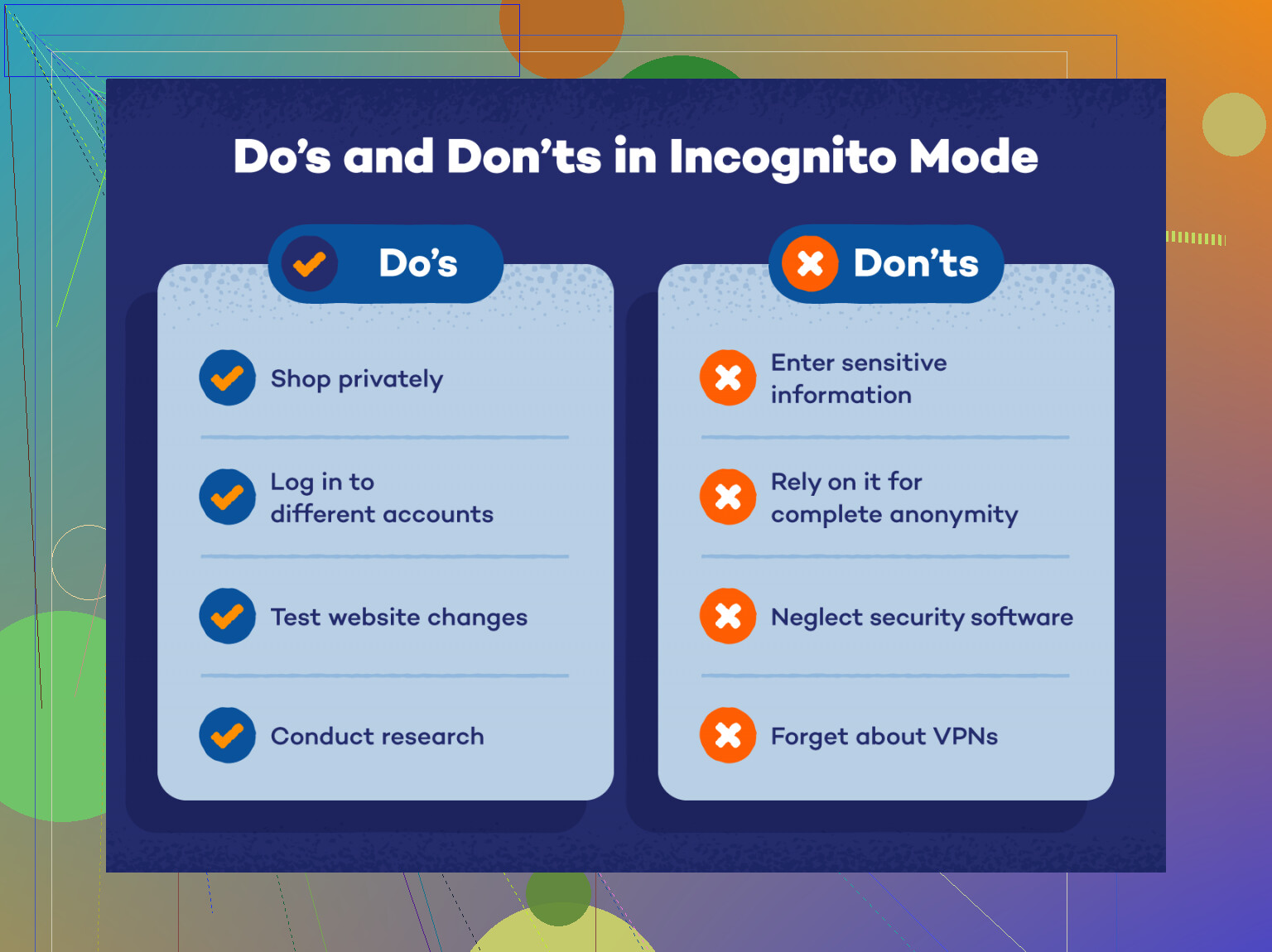
What incognito usually does:
No local history saved.
No cookies kept after you close it.
No autofill junk left behind.
No staying signed in after the session ends, unless you sign back in.
What it does not do:
It does not hide your IP from sites.
It does not stop employer or school logging.
It does not stop DNS logs on many networks.
It does not stop account-based tracking.
It does not make you anonymous. Thats the big one.
Simple rule. Incognito is for local privacy, not network privacy. If your goal is “people on this laptop shouldn’t see my stuff,” use it. If your goal is “I don’t want my school, office, ISP, or the site to track me,” incognito is the wrong tool. Different job, different tool.
Incognito is ‘private’ in the same way closing the bathroom door is private. People in the house might not see what you’re doing, but the water company still knows you used 40 gallons.
I mostly agree with @mikeappsreviewer and @espritlibre, but I’d nitpick one thing: people act like incognito is useless, and that’s not really fair. It does have a legit job. It gives you a clean session. That matters for stuff like logging into a second account, checking a site without old cookies messing things up, or using someone else’s computer without leaving your history sittng there.
What it hides:
- local history
- existing cookies carrying over
- autofill/form leftovers
- some session data after you close it
What it does not hide:
- your IP
- the fact you visited a site
- anything from your ISP, school, or employer network
- tracking if you log into the site anyway
So yeah, it’s private from the next person using your browser, not private from the internet. Browser marketing made this way more confusing than it should of been.
Incognito is basically a disposable browser session. That’s the clearest way to think about it.
I agree with @espritlibre, @chasseurdetoiles, and @mikeappsreviewer on the big point, but I slightly disagree with how often people frame it as almost pointless. It is not pointless. It is just misnamed. “Private” sounds like “hidden from everyone,” when really it means “not saved much on this device.”
Where incognito is actually useful:
- checking prices without old cookies affecting results
- signing into a second account
- borrowing someone’s computer
- avoiding clutter in your own history
Where people get burned:
- school WiFi
- work networks
- logging into personal accounts anyway
- assuming closing the window erases all traces everywhere
One extra thing people miss: downloads and bookmarks usually still remain unless you remove them yourself. So even local privacy is not perfect.
Pros for ‘’:
- easy to use
- good for temporary sessions
- reduces local browser traces
Cons for ‘’:
- poor name, easy to misunderstand
- no network anonymity
- doesn’t stop fingerprinting or account tracking
So no, incognito is not “actually private” in the anonymous sense. It’s private like writing on a sticky note instead of in a diary. Less permanent, not invisible.