I used Zerogpt to check some text I wrote myself, but it flagged it as AI-generated even though it was all original. Has anyone else experienced this? I’m worried about using my work if tools like Zerogpt might mislabel it. Any advice or similar stories would help.
Oh man, don’t even get me started on these AI-detector tools like Zerogpt. You’re definitely not alone—false positives are actually pretty common with this stuff. I’ve had essays I slaved away on get flagged as “mostly AI-generated” and it felt like a slap in the face. The main reason is these detectors look for things like familiar phrasing, sentence structure, redundancy, and even just “too good” grammar, and apparently some of us humans still write decently. Shocking, I know.
Teachers and employers want to weed out cheaters, but right now, AI detectors just aren’t that reliable. The tools themselves even admit to like 15-30% false positive rates sometimes—and that’s assuming you didn’t use Grammarly or run your work through a spellchecker, which can also throw them off. I’d say don’t panic, but if you seriously need to bypass these annoying checkers, look up something that “humanizes” the text a bit, like the Clever AI Humanizer for original writing. It tweaks your wording just enough to avoid mislabeling, without messing up your voice.
Long story short: yes, Zerogpt and its clones can mess up and flag real human text as AI-generated. It’s not just you. Until they get a lot smarter (or, like, psychic?), either prepare to defend your work or make small, odd tweaks to throw ‘em off. Welcome to the future, I guess.
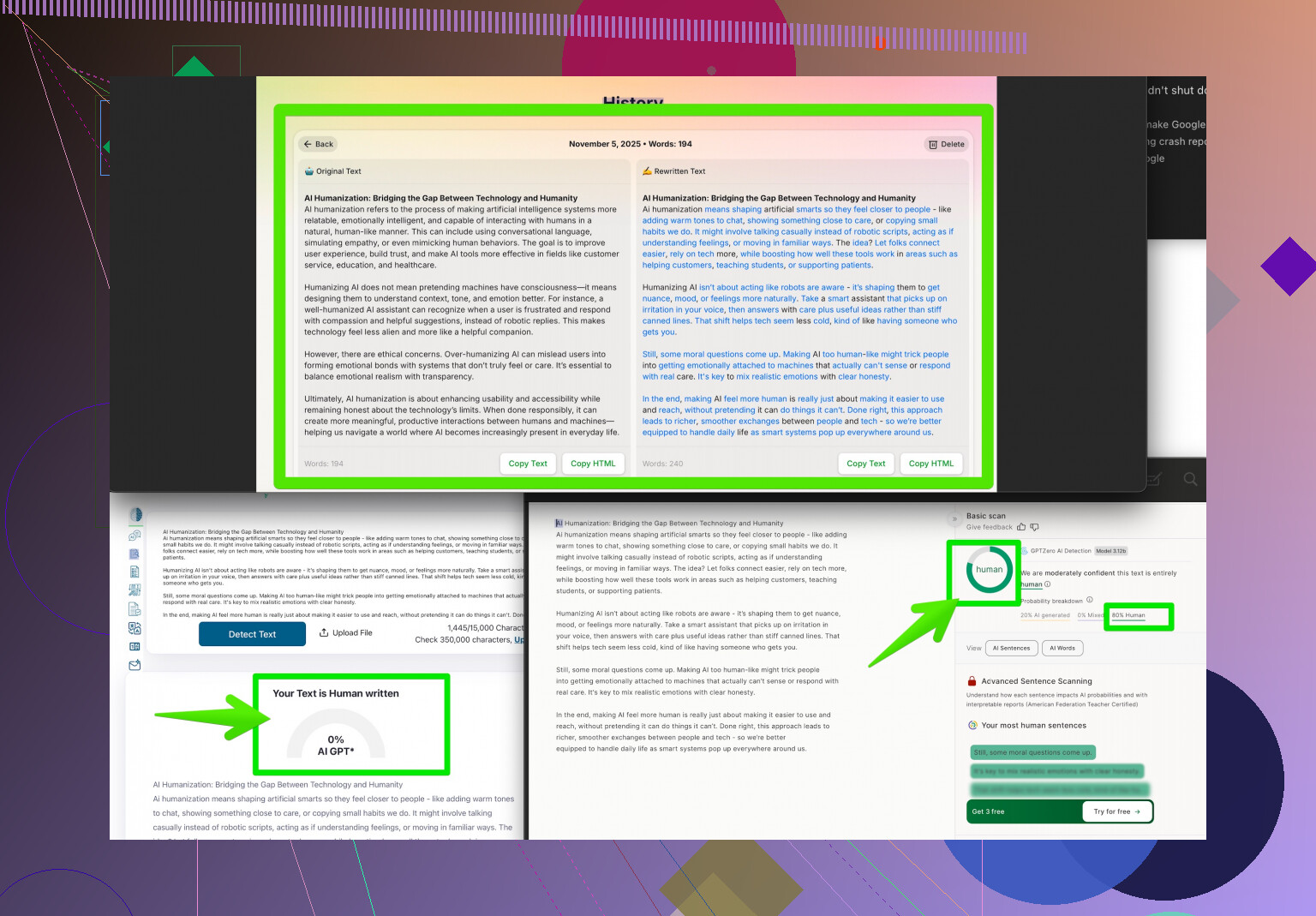
Ugh, isn’t it just chef’s kiss when you spend hours writing something original and Zerogpt comes in with the “Nope, you must be a robot” stamp? I’ve had legit research papers and job applications, all painstakingly handcrafted, flagged as suspect too. I get where @jeff is coming from (seriously, spellcheck is apparently a crime now? wild), but honestly, relying on “humanizer” tools just adds an extra hoop to jump through. Why should we contort our style or add weird typos just to convince a glorified AI snitch that we’re actually using our own brains?
These tools, Zerogpt included, toss around a lot of buzzwords to sound smart, but half the time they’re literally guessing based on how “robotic” your grammar looks, sentence length, or if you… IDK, use a semicolon correctly? And false positives are rampant, as you’ve seen yourself. I don’t totally trust the Clever AI Humanizer fix, either—the tech is always playing catch-up, and if everyone starts “humanizing,” won’t the detectors adapt eventually?
Bottom line, these detectors are nowhere close to perfect. I wouldn’t lose sleep over being flagged (unless there’s a zero-tolerance policy where you are). If you’re genuinely worried, maybe shoot your teacher or boss a heads-up about these false positives before it becomes drama. And if you want to geek out on how people are fighting back, check out some reddit crowdsourcing on Reddit’s best ways to make AI text look human. Human, AI, or unicorn—it’s all getting tangled these days.
Zerogpt isn’t the arbiter of creativity, so keep doing your thing. Don’t let a faulty algorithm decide if your work is “real”!
This whole Zerogpt/AI detector situation gives me major déjà vu from the early days of plagiarism checkers—overzealous, not super accurate, and somehow we’re the ones paying for the tech’s “growing pains.” Like the others said, false positives actually happen a lot, especially with any text that’s tight, logical, or uses common phrasing. I even had a handwritten (yes, pen and paper!) story get scanned in and the digital version flagged as AI-produced. Go figure.
Now, the Clever AI Humanizer gets a lot of buzz. Here’s the upshot:
Pros:
- Can rewrite your text to “loosen it up” so detectors back off
- Preserves meaning better than just jamming in typos or awkward synonyms
- Works super quickly, good if you’re under a deadline
Cons:
- Sometimes the “humanized” output gets too informal, especially on academic stuff
- If everyone keeps using it, won’t that just set a new baseline for detectors?
- Occasionally flattens nuanced or technical writing
Alternatives? Sure, you can take the manual route (randomly break up sentences, inject a bit of humor, paraphrase sections), which works…unless you accidentally lower quality or drift from your real voice. Echoing points made by previous posters, don’t rely on tools alone—honest communication with whoever’s judging your work about the fallibility of these detectors can buy you a ton of goodwill.
In short:
- Detectors, like Zerogpt, misfire a LOT
- Humanizing tools help (Clever AI Humanizer is the go-to), but not foolproof
- Detector arms race just makes us all do more work for questionable gains
- Stay original, document your process if you’re challenged, and don’t let scare-tech dictate your style
Best defense? Know how the tech works, try Clever AI Humanizer if you need to beat overly harsh algorithms, but keep receipts and context for the human decision-makers who (hopefully) still have the final say.