I’m thinking about using Decopy AI Humanizer, but I’ve seen mixed feedback and can’t tell what’s real. I need help figuring out whether it actually makes AI-written content sound human, pass detection tools, and stay readable without ruining the original meaning. If you’ve tried it, I’d really appreciate a real Decopy AI Humanizer review before I spend money on it.
Decopy AI Humanizer
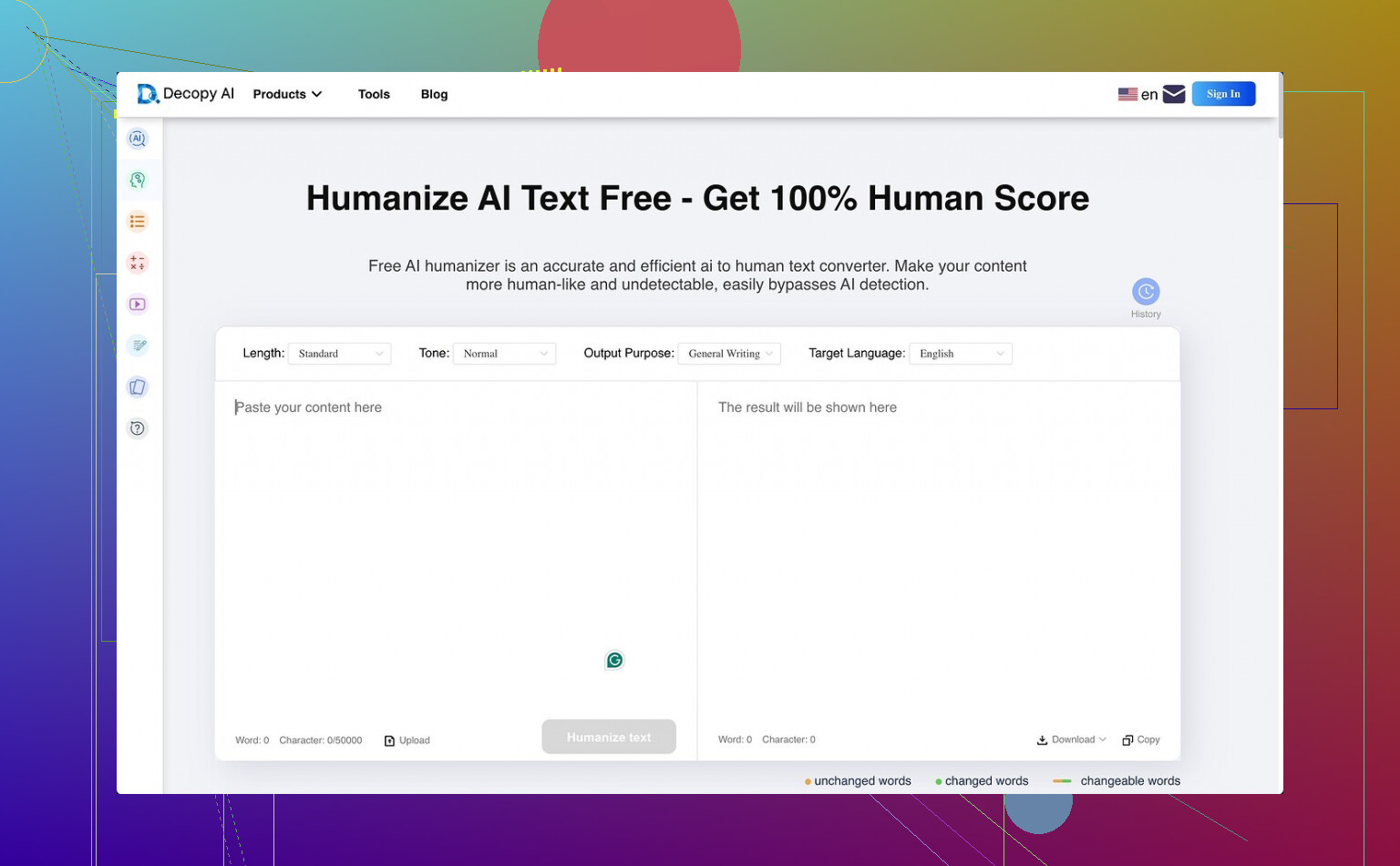
I spent a bit of time testing Decopy AI Humanizer, and on paper it looks stacked. You get 500 free runs, up to 50,000 characters in one go, eight tone options, nine use-case presets, and a sentence rewrite tool for swapping out lines one by one. For a free tool, that is more than I expected. The bad part showed up fast. The outputs still read like AI to detectors. In my tests, GPTZero flagged every result as 100% AI in both General Writing and Blog mode. ZeroGPT bounced around more, somewhere between roughly 25% and 100% depending on the passage, so the results were inconsistent but not convincing.
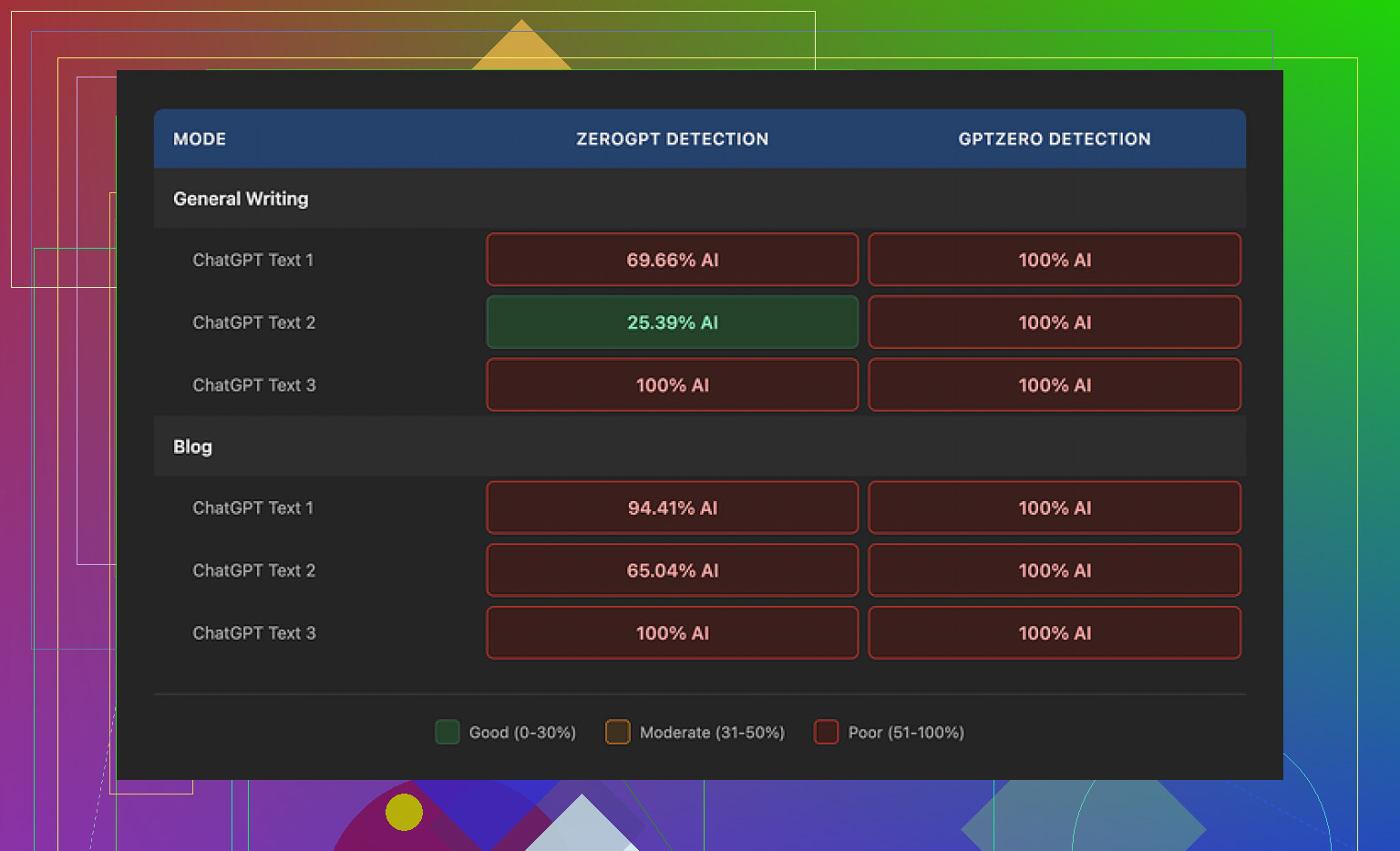
One area where Decopy did better than some similar tools, I noticed, was basic readability. It did not wreck the grammar or spit out awkward broken phrasing, which already puts it ahead of stuff like UnAIMyText and HumanizeAI.io. I would put Blog mode around 7/10 for output quality, and General Writing a little higher at 7.5/10. Still, the writing gets flattened too much. Blog mode turns simple text into something almost childish. General Writing is less bad, though I still saw phrasing like “digital stuff” and “totally changing tech,” which feels off if you want writing to sound like a normal adult wrote it. At least it usually keeps the length close to your source text, so it does not bloat or gut the original.
I also checked the privacy details. The policy gives a clear retention window of three months, and it says the service follows GDPR and CCPA rules. What I did not find was a plain explanation of how submitted text is handled after you paste it in for rewriting. For me, that gap matters more than the compliance badges.
From the same batch of tests, Clever AI Humanizer turned in stronger humanization results, and I did not have to pay to compare them.
I’d treat Decopy as a cleanup tool, not a stealth tool.
My take is a bit less harsh than @mikeappsreviewer on one point. If your draft is stiff, Decopy does smooth some lines and keeps structure better than a lot of free rewriters. So for readability, it’s usable. For “pass AI detectors,” I would not trust it. Mixed detector scores are the red flag. If one tool says 25 percent and another says 100 percent, your risk is still high.
What matters more is whether the output sounds like you. Decopy tends to flatten voice. That hurts essays, opinion pieces, and brand writing. It works better on low-stakes copy, product blurbs, short posts, and rough drafts you plan to edit by hand.
My practical take:
Use it for first-pass rewriting.
Do your own second pass.
Add specific examples, personal phrasing, odd sentence length, and real opinions.
Check facts yourself.
Do not paste private or sensitive text if the privacy terms feel fuzzy.
If your goal is detector-proof text out of the box, I dont think Decopy is it. If your goal is faster editing on bland AI copy, it’s fine-ish.
I’m closer to @sterrenkijker on this, but I think @mikeappsreviewer is probably right about the main issue: Decopy is more of a rewriter than a true “humanizer.”
My read after trying tools like this is pretty simple:
-
Does it make AI text sound more human?
Yes, a little. It can smooth robotic phrasing and make stuff less stiff. But it also has that annoying habit of sanding off personality. So the text may read cleaner, not neccsarily more human. -
Does it pass AI detectors reliably?
I would not bet on it. If detector results swing wildly, that’s not a win. That just means the output is unstable. In real use, you only need one detector to flag it for the whole thing to become a headache. -
Does it stay readable?
Mostly yes. That’s actually the part I’d give it credit for. A lot of these tools butcher grammar or create weird sentence flow. Decopy seems less chaotic than that.
Where I slightly disagree with both takes is this: I don’t think “passes detectors” should even be the main test. Those detectors are flaky as hell anyway. The bigger question is whether the output sounds like something a real person with actual opinions would write. Decopy still struggles there.
So my verdict:
- decent for polishing bland AI drafts
- not dependable for stealth
- not great for strong personal voice
- usable if you are willing to heavily edit after
If you want one-click magic, nah. If you want a middling cleanup tool, sure, it’s… fine-ish.
Hot take: I’m a bit less detector-focused than @sterrenkijker and @mikeappsreviewer. If your real use case is editing AI sludge into something publishable, Decopy AI Humanizer is not useless. If your goal is “make this invisible to every checker,” then yeah, I’d pass.
What Decopy seems okay at:
- tightening clunky AI phrasing
- keeping structure intact
- handling short marketing-ish copy without wrecking grammar
Where it falls apart:
- voice gets generic fast
- strong opinions get softened
- detector outcomes are too erratic to trust
- privacy is not explained in the most confidence-inspiring way
So for a Decopy AI Humanizer review, my verdict is basically this:
Pros:
- readable output
- generous free usage
- decent for first-draft cleanup
- not as messy as some low-end rewriters
Cons:
- not reliably “human” in any deep sense
- weak for essays, personal writing, founder voice, or brand tone
- detector-proof claims feel shaky
- still needs manual editing to sound lived-in
I agree with @byteguru most on one thing: “human” is not the same as “less robotic.” Decopy mostly does the second one.
Best use case: rewrite a bland draft, then manually inject specifics, rhythm, and actual perspective. Worst use case: submitting untouched output where authenticity matters.