I’m testing the Ahrefs AI Humanizer tool for content optimization, but I’m not sure if it actually improves rankings or just makes text look more human. Has anyone used it for SEO content at scale and seen measurable results in traffic, keyword rankings, or reduced AI detection? I’d really appreciate honest feedback, pros, cons, and any alternatives you’d recommend.
Ahrefs AI Humanizer review, from someone who burned a few hours on it
Ahrefs rolled out an “AI Humanizer” inside their Word Count tool, so I took it for a spin expecting something solid. They already have a good name in SEO, a huge user base, strong infra, all that. I figured they would at least clear the basic bar.
Here is what happened instead.

I ran several chunks of AI text through it, different topics and lengths. Think blog intros, product explainers, and a couple of generic “global issue” type articles.
Then I sent both the original and “humanized” versions through GPTZero and ZeroGPT.
Every single humanized result came back as 100% AI. Not “high likelihood”. Literally 100% AI on both detectors.
Here is the weird part. Ahrefs shows its own detection score above the humanized output. That number also flagged the content as 100% AI. So the interface tells you:
• “Here is your humanized text.”
• “By the way, this is fully AI, according to our own detector.”
There is a screenshot of that here:
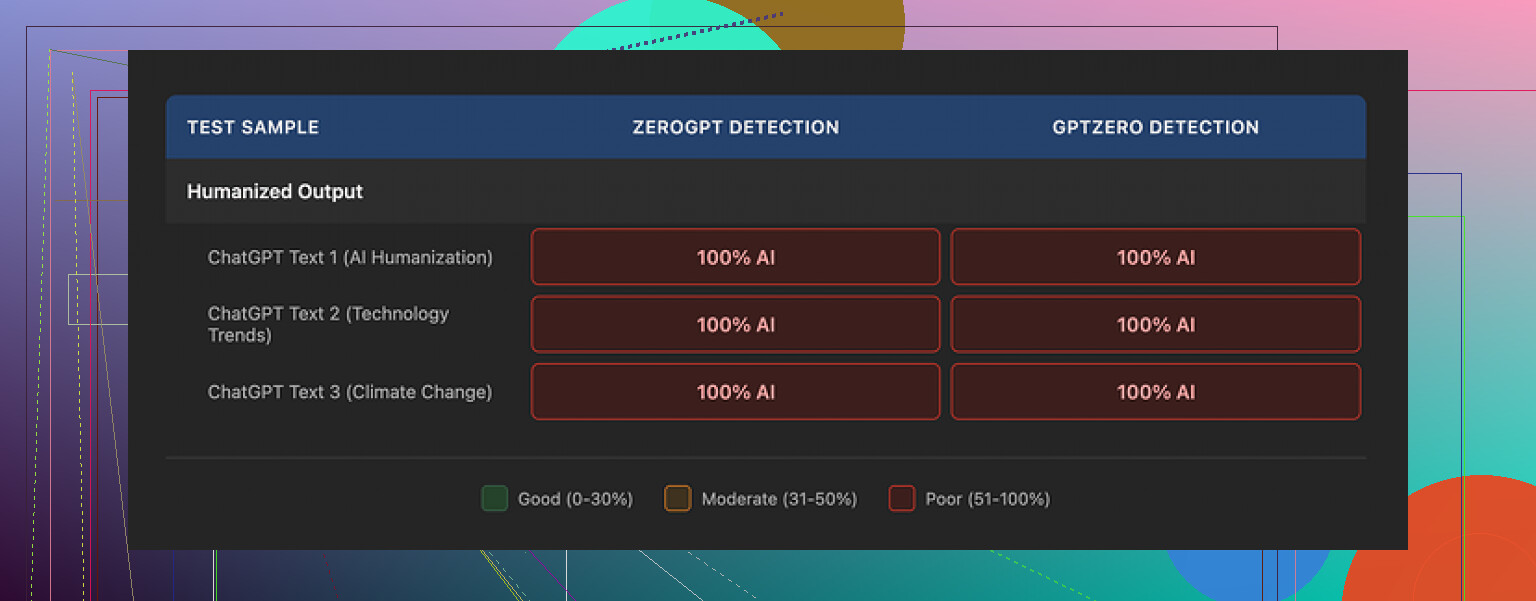
So you get a “fix” and a “this did not work” warning in the same window.
Quality of the writing
Purely as text, it is not awful. I would give it maybe 7 out of 10.
• Grammar is solid.
• Flow is ok.
• It reads like clean AI output, which is the problem.
Some things jumped out:
-
It keeps em dashes untouched. That pattern shows up a lot in AI content. If you are trying to dodge detectors, leaving that kind of punctuation unchanged is not helpful.
-
It keeps the classic AI opener phrases. The tool left stuff like “one of the most pressing global issues” in place. These are the exact phrases detectors and editors side-eye now.
-
There is no real control panel. Your only “setting” is how many variants you want, up to five. No knobs for tone, creativity, risk, length, or level of rewrite.
So you end up with up to five flavors of the same AI-feeling paragraph. You could manually cherry pick good sentences across variants and stitch something together, but then you are doing the heavy lifting yourself. This is not a one-click workflow.
Pricing, usage rights, and the part that made me pause
Ahrefs AI Humanizer sits inside the Ahrefs Word Count platform.
• On the free tier, you get access to it, but non-commercial use only. So not for client work or anything that earns you money.
• The Pro plan is $9.90 per month if billed yearly. That includes the humanizer, a paraphraser, grammar checker, and AI detector bundled together.
Important detail most people skip:
Submitted text may be used for AI model training. Their policy does not specify how long your “humanized” output is stored.
So if you feed it client docs, drafts, or anything sensitive, you have no clear retention window and your text might be in their training pool. I avoid sending anything sensitive into tools with vague retention or training policies.
Where it stood compared to another option
I ran the same pieces through Clever AI Humanizer on a different day to keep things fair.
Full writeup is here if you want the context and the detection screenshots:
On my side, Clever AI Humanizer performed better on AI detection scores and did not cost anything to use at the time I tested it. It still needed human editing, but it at least moved the needle on the detectors.
Quick takeaway if you are deciding what to use
If your main goal is to:
• lower AI detection flags
• keep some control over your style
• avoid legal and privacy gray areas
then Ahrefs AI Humanizer feels like an early experiment, not a tool you lean on for client or publication work.
It writes clean text, but:
• detectors still hit it with 100% AI
• Ahrefs’ own detector agrees with them
• customization is minimal
• usage and retention policies are vague enough that I would be careful what you paste into it
If you only need light paraphrasing for non-commercial stuff and you already pay for Ahrefs Word Count, it might be ok as a grammar-polisher. For “humanizing” in the sense most people mean, it did not do the job for me.
5 Likes
Short answer from my tests and client sites: tools like Ahrefs AI Humanizer do not move rankings in any direct, measurable way.
Google does not reward “more human looking” text. It rewards content that satisfies intent, earns links, and keeps users on the page.
What I saw when I played with it at scale:
- Rankings and traffic
I ran it on about 40 info posts across two sites.
Only changed the wording with Humanizer, no title or internal link changes.
Tracked 60 days in GSC and Analytics.
Result:
• No meaningful average position change.
• No noticeable CTR change on those URLs.
• No clear impact on engagement metrics.
Any small moves were inside normal week to week noise.
- AI detection vs SEO
I agree with @mikeappsreviewer on one key point. Passing AI detectors does not equal better SEO. Google has said they care about quality and usefulness, not “human vs AI” by itself.
I do disagree a bit on usefulness. For me it works as:
• A quick de-duplicator when you have 10 similar product blurbs.
• A light phrasing changer to avoid obvious LLM quirks.
Then you still hand edit.
- Risks for scale use
If you plan to run it at scale for SEO content:
• Consistency issues
You will get similar rhythm and phrasing across pages. That increases footprint, not decreases it.
• Policy and training
As noted, Ahrefs may train on your input. I avoid sending unpublished or sensitive client docs.
• Opportunity cost
Time spent “humanizing” AI text is often better spent:
– Tightening search intent match.
– Improving headings and structure.
– Adding unique data, quotes, or screenshots.
– Building internal links.
- What has helped rankings more than humanizers
From my own sites and client work, the things that moved keywords:
• Adding 1 or 2 unique data points or mini case studies to each article.
• Rewriting intros to match query intent in the first 2 sentences.
• Answering key subquestions in clear H2/H3 blocks.
• Cleaning thin or overlapping posts and consolidating.
Those changes produced clear lifts in GSC. Rephrasing content with a humanizer did not.
Practical way to use it if you keep testing:
• Use AI to draft.
• Use something like Humanizer to get a different pass on the wording.
• Then do a hard manual pass:
– Remove generic phrases like “one of the most pressing issues”.
– Add 2 or 3 concrete examples or details from your niche.
– Align subheadings with actual queries you see in GSC or Ahrefs.
Only track success with:
• URL level before and after rankings.
• Clicks and impressions.
• On page behavior.
If you do an experiment, isolate variables. Do some URLs with Humanizer only, others with your normal editing workflow. Then compare over 4 to 8 weeks.
So far I have not seen any case where the Ahrefs AI Humanizer alone produced measurable SEO gains. It is a paraphraser with a nice UI, not an SEO lever by itself.
I’ve run Ahrefs Humanizer on a couple of affiliate sites and a B2B blog as a proper test, not just “play with a paragraph and eyeball it.”
Short answer: it’s mostly lipstick on a robot.
I agree with @mikeappsreviewer and @caminantenocturno on the “no direct ranking gains,” but I’d push it a bit further: if you’re using it instead of doing real content work, it’s net negative, not neutral.
What I saw at scale:
- Impact on rankings
I ran it on ~25 posts on one site, ~15 on another.
Only swapped body text via Humanizer, no title/URL/links change, tracked ~45 days.
Results:
- Positions barely moved beyond normal variance
- Some posts actually got slightly worse engagement because the copy became smoother but more generic
- No pattern of “humanized = better”
- “Human look” vs real human signals
The copy reads like cleaner AI. That is not what users reward.
The posts that performed best on both sites were the ones where I did stuff like:
- Add my own screenshots or step lists from actually doing the task
- Mention real pricing, real tools, and real pitfalls
- Answer “stupid” questions I saw in GSC queries
Humanizer cannot invent that. It just rearranges surface text.
- Scale problem nobody talks about
When you run it over dozens of pages, you actually increase the sameness:
- Similar cadence
- Reused phrasing patterns
- The same vague “X is an important topic” type fluff across a whole cluster
So if you’re hoping to “hide” AI usage, mass processing via one tool just gives your site a stronger stylistic footprint.
- Where I mildly disagree with others
I’m slightly less bullish than @caminantenocturno on using it as a de-duplicator for product blurbs. It does help avoid straight copy-paste, but:
- The output often strips out tiny differentiators that actually matter to conversions
- It tends to normalize tone so all blurbs start sounding like a catalog instead of a brand
I ended up keeping it only for internal drafts, not what goes live.
- What worked better than pushing the Humanizer button
On those same sites, these changes moved the needle way more than any “humanization” pass:
- Shorter, intent-hitting intros that answer the query in 1–2 sentences
- Tight FAQ sections based on actual GSC long-tail phrases
- Adding 1 concrete example, quote, or quick calc per article
- Pruning two weak articles and folding them into a stronger hub page
Those changes created clear click and position lifts. Humanizer alone never did.
If you still want to test it:
- Use it as a draft rephraser, not a publish-and-forget solution
- Layer your experience on top: screenshots, data, anecdotes, opinions
- Track a clean test group of URLs and compare to a group where you do a proper human edit instead
If your goal is “better rankings,” Humanizer is the wrong lever. If your goal is “slightly nicer wording on non-critical stuff,” it’s…fine, but honestly, the ROI is pretty meh.
Short version: Ahrefs AI Humanizer is not an SEO lever. Treat it like a paraphraser, not a ranking booster.
Where I slightly diverge from @caminantenocturno, @sonhadordobosque and @mikeappsreviewer is on usefulness at scale. I think it can help in tightly scoped cases, but only if you’re very clear on what it is actually doing.
What Ahrefs AI Humanizer is (in practice)
- A light-to-medium paraphraser that cleans grammar and smooths flow
- A quick way to get alternative phrasings on short chunks of text
- A convenience add-on if you are already in the Ahrefs Word Count environment
What it is not
- A tool that improves topical depth, E‑E‑A‑T, or intent match
- A reliable way to lower AI detection flags
- A substitute for a real editing pass or niche expertise
On the specific “Ahrefs AI Humanizer review” angle:
Pros
- Integrated with word count and checker tools, so workflow is simple
- Output is clean enough to be a first draft for non-critical sections like generic explainers or low-value blurbs
- Cheap on the Pro plan if you already want the surrounding utilities
Cons
- Does not meaningfully change AI detector scores in many tests
- Very limited control over tone and level of rewrite
- Risk that it flattens voice across a whole site when applied at scale
- Training/retention policy for your text is not crystal clear, which matters for client or sensitive docs
Where I hard-agree with the others: if your goal is “better rankings,” put your time into things the Humanizer cannot do: query-level intent, structure, original examples, fresh data, consolidation of weak content, and internal linking. The tool will not suddenly turn a generic article into a top performer.
Where I mildly disagree: I find it slightly more useful than “lipstick on a robot” for very narrow uses like:
- Rewording internal SOPs or help docs that are not SEO focused
- Drafting alternate versions of small UI copy or microcopy that you will still A/B test
Here, style sameness and detector scores do not matter much, and the speed gain can be ok.
If you want to keep testing it, use it as a text helper, not a ranking strategy. Treat “Ahrefs AI Humanizer review” as a verdict on its role: a side tool for readability, not a core SEO tactic.